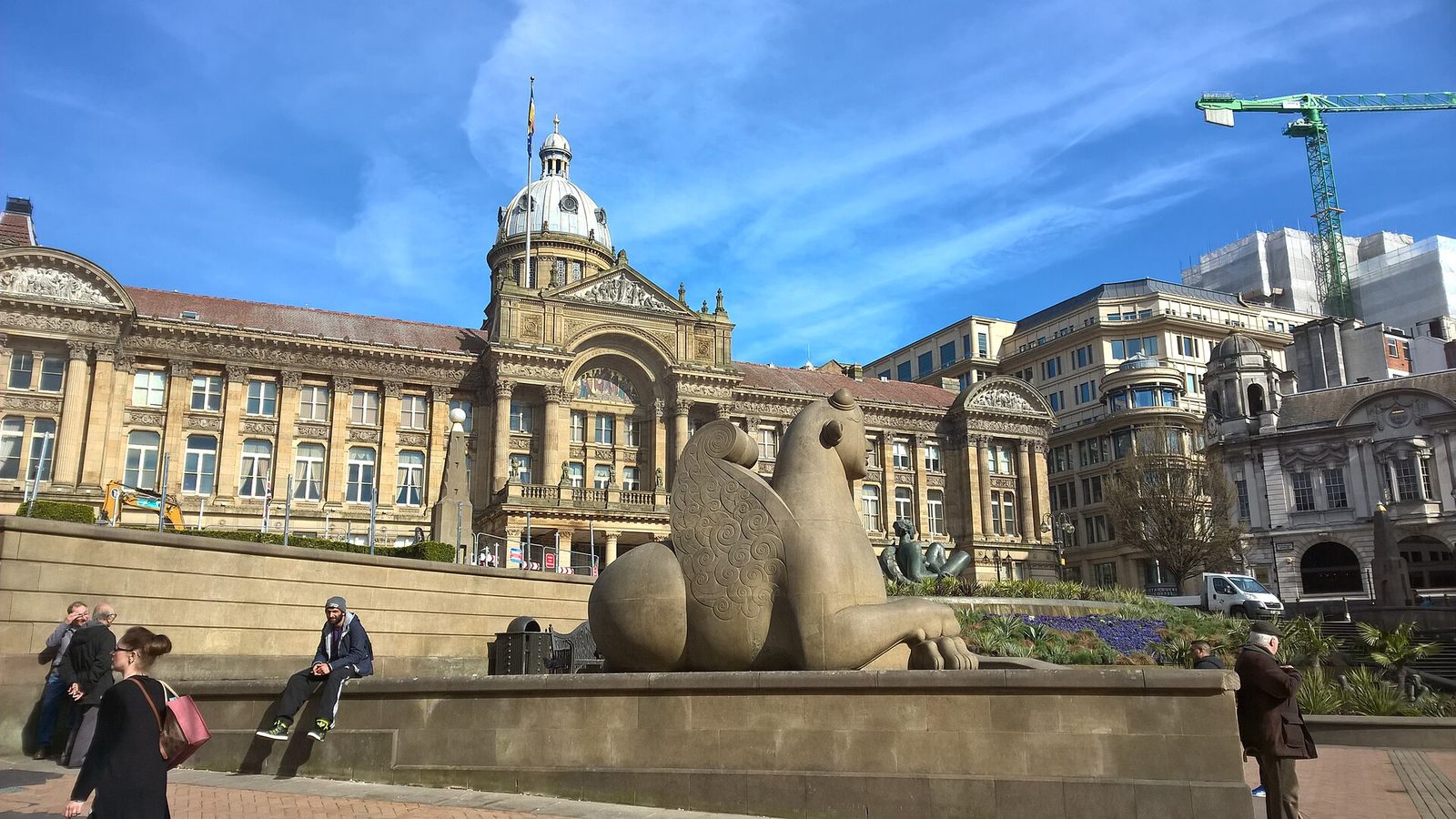
The best areas to live in Birmingham for professionals are usually the Jewellery Quarter and city centre for a walkable commute, Digbeth for converted industrial space close to the new Eastside tram line, Edgbaston and Harborne for green streets near the University and the Queen Elizabeth Hospital, and Moseley, Kings Heath and Stirchley for houses with gardens and, since April 2026, a direct train to New Street. The average private rent in Birmingham was £1,106 a month in September 2026, according to the Office for National Statistics (checked October 2026). Your shortlist should come from where you work, how often you go in and what you can spend, so this guide sets out the facts for each area and the checks to make before you sign.
Birmingham neighbourhoods at a glance
| Area | Typical homes | Main public transport | Suits |
|---|---|---|---|
| Jewellery Quarter | Flats in converted workshops and new blocks | Jewellery Quarter rail and tram stop, short walk to Snow Hill | Short commute, evenings out |
| City centre and Colmore | Apartments | New Street, Moor Street, Snow Hill, Metro | No car, office five days a week |
| Digbeth and Eastside | Warehouse conversions, new apartment schemes | Metro to Millennium Point, Moor Street, coach station | Creative and tech workers |
| Edgbaston | Victorian and Georgian houses, flats on the Calthorpe estate | Metro to Edgbaston Village, buses, University station | Hospital, university and city workers |
| Harborne | Terraces, semis, Arts and Crafts houses at Moor Pool | Buses | Quieter evenings, more space |
| Moseley, Kings Heath, Stirchley | Victorian and Edwardian terraces, larger family houses | New Camp Hill line stations, buses | Houses with gardens, hybrid workers |
Treat the table as a starting point. Streets inside one postcode can differ more than two neighbouring areas, so walk the road at night and at rush hour before you commit.
What renting costs across the city
The ONS housing prices and rents tool for Birmingham, updated on 21 October 2026, puts the average private rent at £1,106 a month in September 2026, up 3.3% from £1,070 a year earlier. By size, a one-bedroom home averaged £834, two bedrooms £1,009 and three bedrooms £1,141. By type, flats and maisonettes averaged £923 and terraced houses £1,102 (checked October 2026).
The ONS does not publish rents for individual neighbourhoods, and city-centre new-build flats and large Edgbaston houses will sit well above these citywide averages. Use the figures to sense-check a listing rather than to price a street. For buyers, the same tool gives an average Birmingham house price of £235,000 in August 2026 (provisional) and £213,000 for first-time buyers.
Rent is only one line. Birmingham City Council's Council Tax bands and charges for 2026-27 range from £1,568.78 for Band A to £2,353.17 for Band D outside the Sutton Coldfield parish area, and most city-centre flats sit in the lower bands. Check the band of a specific property on GOV.UK's Council Tax band checker before you agree a rent.
Jewellery Quarter and the city centre
The Jewellery Quarter is one of Birmingham's 29 conservation areas, and the council's conservation area list describes it as home to the city's largest surviving group of Victorian and early 20th century jewellery workshops. Many of those buildings now hold flats, offices, bars and restaurants alongside working jewellers and the Birmingham Assay Office. The Museum of the Jewellery Quarter preserves the Smith & Pepper workshop, left as it was when its owners retired in 1981, which gives a sense of how the area worked for most of its history.
For commuters the draw is the Jewellery Quarter station, served by both trains and trams. The West Midlands Metro runs from Wolverhampton through the Jewellery Quarter and the city centre, and Transport for West Midlands says on its tram information page that trams run every 8 to 10 minutes every day, with more at peak times, and that every stop has step-free access (checked October 2026).
The central business district around Colmore Row is also a conservation area, and living there or around the stations suits people who want to walk to the office and keep a car out of the picture. The trade-offs are the usual ones for city living: noise from bars and roadworks, limited outdoor space and service charges that vary a lot between buildings.
Digbeth and the Eastside tram extension
Digbeth sits east of the Bull Ring, and its two conservation areas, Digbeth, Deritend and Bordesley High Streets and Warwick Bar, cover some of the oldest streets in the city. The area is still changing fast. The landlord of the Custard Factory estate describes Digbeth on its neighbourhood site as "a growing neighbourhood of eclectic individuals and innovative businesses in Birmingham's former industrial heartland", and the estate includes creative studios, tech companies and media agencies in former factories.
Transport is improving. According to the West Midlands Combined Authority's Eastside Metro update published on 15 October 2026, trams already run from Bull Street to a temporary stop at Millennium Point next to the HS2 Curzon Street site, and work has started on the final link to Digbeth Coach Station. Passenger services to Digbeth Coach Station are due to start in 2028, and the Curzon Street tram stop will open later alongside the HS2 station.
Construction is the flip side. Expect cranes, road closures and late-night venues on some streets for several years. Ask about sound insulation, check what planning applications are live near the building and visit on a Friday or Saturday night before you sign.
Edgbaston and Harborne
Edgbaston is a mile or so south-west of the centre and suits people working at the University of Birmingham, the Queen Elizabeth Hospital or in the city. Much of it is a single landholding run by Calthorpe Estates, and the Edgbaston conservation area is covered by an Article 4 Direction, which removes some permitted development rights and means owners need permission for changes such as replacement windows. Its shopping and dining streets are marketed as Edgbaston Village, where an artisan market with up to 80 stalls takes over Greenfield Crescent on the second Saturday of every month (checked October 2026). The Metro now reaches Edgbaston Village along Broad Street and Hagley Road.
The rebuilt University station, completed in January 2024, serves the campus and the hospital. The West Midlands Rail Executive says it can handle 7.2 million passengers a year, against the half a million the 1978 station was designed for, and it has a new pedestrian bridge over the canal into the university.
Harborne, further west, has no railway station, so most commuters use buses, cycle or drive. It has three conservation areas on the council's list: Harborne Old Village, Greenfield Road and Moor Pool, an early 20th century garden suburb whose houses are also covered by an Article 4 Direction. That matters if you plan to buy and renovate, because work you could do elsewhere without planning permission may need consent here.
Moseley, Kings Heath and Stirchley
The biggest change for south Birmingham in decades came on 7 April 2026, when three new stations opened on the Camp Hill line at Moseley Village, Kings Heath and Pineapple Road in Stirchley. The West Midlands Rail Executive's Camp Hill line page says these communities are connected to the city centre by train for the first time since the original stations closed in 1941, during the Second World War, because of coal shortages. Estimated journey times to New Street are 8 minutes from Moseley Village, 11 minutes from Kings Heath and 14 minutes from Pineapple Road. Each station has lifts, ticket machines and secure bike parking.
Demand has been strong. By September 2026 more than 307,000 passengers had used the three Camp Hill line stations, according to a WMRE announcement of the project's National Rail Award. If you looked at these areas before 2026 and ruled them out because of slow bus journeys, look again.
Moseley's housing stock is largely Victorian and Edwardian, and two conservation areas, Moseley and St Agnes, both carry Article 4 Directions. Kings Heath and Stirchley tend to offer terraced houses on tighter streets. Both are well suited to hybrid workers who want a garden and a spare room for a desk.
Bills, broadband and the car question
Before you choose between a central flat and a suburban house, price the running costs of each. A few checks make a real difference:
- Energy. Look up the property's Energy Performance Certificate on the GOV.UK EPC register. Converted industrial buildings and Victorian houses can both have poor ratings.
- Broadband and mobile signal. Enter the exact address into Ofcom's broadband and mobile checker to see which speeds and networks are available, then test mobile signal indoors at the viewing.
- The Clean Air Zone. Birmingham's Clean Air Zone covers the city centre inside the A4540 Middleway and operates 24 hours a day, every day of the year. Residents who drive a vehicle that does not meet the standards will pay to drive in it, so check your car before taking a flat inside the ring road.
- Bus fares. National Express West Midlands lists single and day ticket prices of £3 for an adult single and £5.50 for an adult day ticket (checked October 2026), which is useful for comparing a suburban bus commute with a train or tram.
Renting rules that changed in 2026
Anyone renting privately in England now signs up under a different system. GOV.UK's tenancy deposit protection guide explains that assured periodic tenancies replaced assured shorthold tenancies on 1 May 2026, and that your landlord must protect your deposit in a government-approved scheme within 30 days of receiving it.
The government's guidance on fees landlords can charge sets the limits that matter when you are viewing flats (checked October 2026):
- A holding deposit of no more than one week's rent, normally held for 15 days.
- A tenancy deposit of up to five weeks' rent where the annual rent is below £50,000.
- No rent before the tenancy agreement is signed, and no more than one month's rent in advance once it is signed.
- Letting agents must publish their fees, including in adverts on property portals.
Landlords also had to give existing tenants the official Renters' Rights Act Information Sheet 2026 by 31 May 2026. If you are unsure whether something you have been asked to pay is allowed, Citizens Advice can explain your options.
Checks before you sign
Once you have a shortlist, these steps save most of the costly surprises:
- Travel the commute at the time you would really do it, including the late journey home.
- Ask for the EPC, the council tax band and the service charge in writing.
- Read the inventory line by line and photograph the property on the day you move in.
- Confirm which scheme will protect your deposit and get the certificate within 30 days.
- If buying in a conservation area, ask the council whether an Article 4 Direction applies before planning any changes.
- Visit at a weekend evening as well as a weekday, especially near venues or building sites.
For more on life in the city, from schools to culture, see the rest of our Birmingham guides.