Classical music in Birmingham - venues, choirs and what to look out for
Where Birmingham actually sounds best: the halls, chapels and ensembles worth planning around.
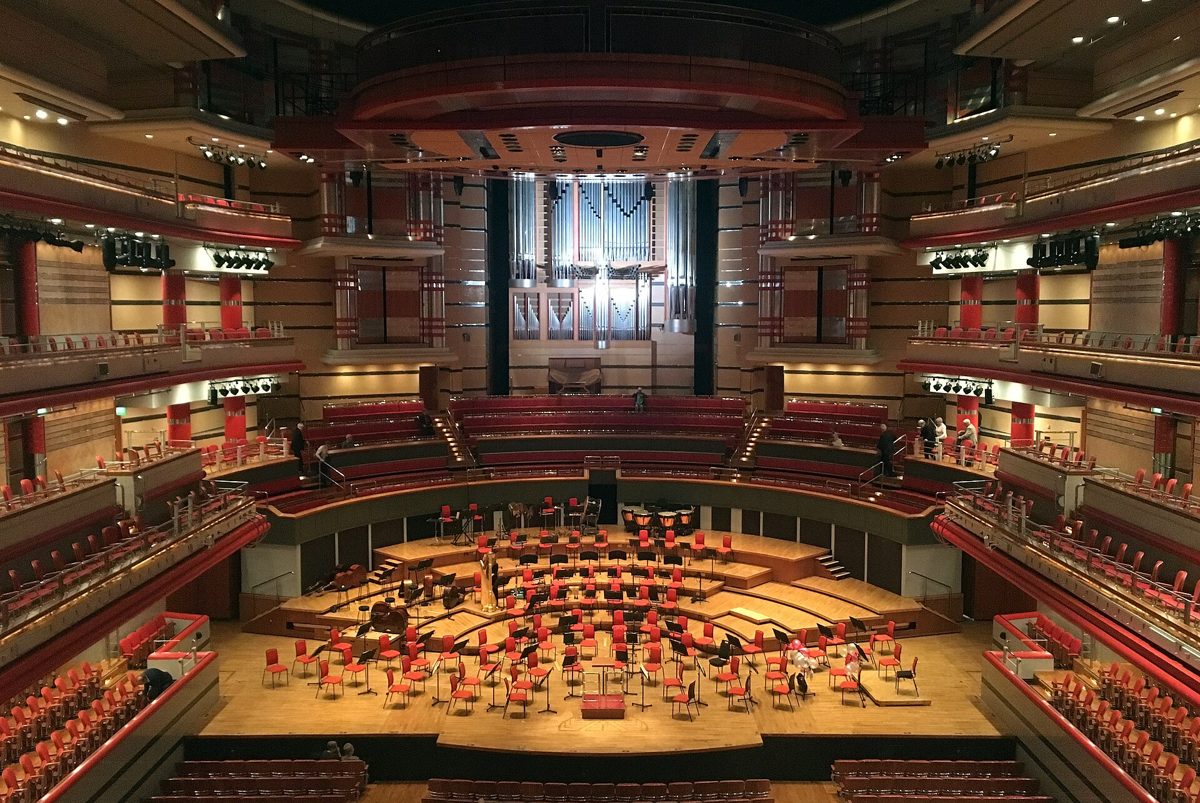
Birmingham offers a dense, interconnected classical music ecosystem anchored by four distinct venues and one elite orchestra. The City of Birmingham Symphony Orchestra serves as the resident ensemble at Symphony Hall, while Birmingham Town Hall functions as a historic mid-size space for choral and solo work. The Barber Concert Hall provides an intimate university setting focused on chamber music. Together, these spaces cover the full spectrum of orchestral, choral, and recital repertoire.
Symphony Hall
Symphony Hall stands as the primary concert venue in the International Convention Centre complex on Centenary Square. Opened in 1991, the hall was designed by architects Percy Thomas Partnership with acoustician Russell Johnson of Artec Consultants. It seats approximately 2,200 people and functions as the home base for the City of Birmingham Symphony Orchestra.
The acoustic design separates Symphony Hall from standard multipurpose auditoriums. The room features a heavy, adjustable acoustic canopy suspended above the stage, which reflects sound outward to the stalls and circle. Behind the stage, the hall conceals a massive concrete reverberation chamber with doors that open or close depending on the ensemble size. For a full romantic orchestra performing Mahler or Strauss, the chambers open to increase reverberation time. For a vocal recital, the chambers close to tighten the acoustic and preserve lyric diction. The rear wall of the hall features acoustic diffusers shaped like large concrete blocks, preventing sound from bouncing directly back to the performers.
This venue handles large-scale orchestral repertoire better than any other space in the city. The CBSO performs its subscription series here, bringing in international guest conductors and soloists. The hall also hosts touring orchestras, large choral societies, and amplified crossover events. The programming leans heavily on symphonic works from the 19th and 20th centuries, though the flexible acoustic allows the venue to present everything from Bach Passions to film music screenings with live orchestra.
City of Birmingham Symphony Orchestra
The City of Birmingham Symphony Orchestra, commonly referred to as the CBSO, ranks among the leading British orchestras. Founded in 1920, the orchestra gained international prominence during the tenure of Simon Rattle, who served as music director from 1980 to 1998. Rattle led the campaign to build Symphony Hall, arguing that the ensemble had outgrown its previous home in Birmingham Town Hall. Subsequent music directors include Sakari Oramo, Andris Nelsons, and Mirga Gražinytė-Tyla. The current music director is Kazuki Yamada.
The orchestra operates as a full-time salaried ensemble with approximately 80 musicians. It maintains a broad discography, including award-winning recordings of Sibelius symphonies with Oramo and works by Mieczysław Weinberg with Gražinytė-Tyla. The CBSO also supports a dedicated chorus, the CBSO Chorus, which performs major choral works alongside the orchestra. A youth choir and a family choir expand the organization's reach into the community.
The CBSO excels in late romantic and 20th-century repertoire. The brass section carries a distinct weight and warmth, suited to the symphonies of Bruckner, Sibelius, and Shostakovich. The strings maintain clarity even in dense post-romantic scores. Members looking for a comprehensive orchestral experience should track the CBSO subscription season, which runs from autumn through spring and features thematic programming, composer retrospectives, and collaborations with contemporary soloists.
Birmingham Town Hall
Birmingham Town Hall is a Grade I listed building located on Victoria Square, adjacent to the Museum and Art Gallery. Designed by architects Joseph Hansom and Edward Welch, the building opened in 1834. The design draws inspiration on the Roman temple of Castor and Pollux, featuring a prominent portico with Corinthian columns. The hall seats approximately 1,100 people.
The acoustic in Town Hall differs sharply from the engineered precision of Symphony Hall. The room is dry, clear, and immediate. Sound travels directly from the stage to the listener with minimal reverberation. This acoustic signature suits certain repertoire perfectly but challenges others. The clarity highlights vocal diction and the articulation of period instruments. However, the lack of natural reverberation means late romantic symphonic works can sound constrained or austere in this space.
Town Hall programming reflects its acoustic strengths. The venue serves as a primary stage for early music ensembles, solo piano recitals, and chamber orchestras. Promoters frequently book period-instrument groups here because the dry acoustic allows listeners to hear the distinct timbres of gut strings and valveless brass without muddy reverberation. The hall also maintains a strong tradition of choral music. The Birmingham Triennial Music Festival, which commissioned works from Mendelssohn, Dvořák, and Elgar, historically took place in this building. Today, the venue continues to host chamber choirs, vocal recitals, and smaller touring ensembles.
Barber Concert Hall
The Barber Concert Hall sits within the Barber Institute of Fine Arts on the campus of the University of Birmingham in Edgbaston. The institute itself opened in 1939, founded by Martha Constance Hattie Barber in memory of her husband. The concert hall occupies a space within the art deco building designed by architect Robert Atkinson.
The room seats roughly 400 people, creating an intimate environment for chamber music. The acoustic is warm, focused, and balanced. Unlike the cavernous Symphony Hall or the dry Town Hall, the Barber Concert Hall provides a natural, unforced amplification of small ensembles. String quartets benefit from the resonant lower frequencies, while piano recitals gain clarity in the upper registers without harshness.
The venue specializes in chamber music, solo recitals, and small ensemble work. The university hosts a regular concert series here, bringing in established string quartets, piano soloists, and early music groups. The programming often complements the institute's art exhibitions, creating a cultural crossover for attendees. Members seeking an alternative to large orchestral performances should monitor the Barber schedule for weekday lunchtime recitals and evening chamber concerts. The intimate scale allows listeners to observe the physical mechanics of performance, from the bowing techniques of a string quartet to the pedaling of a solo pianist.
Navigating the Birmingham Classical Music Season
Members looking to build a coherent schedule across these four venues should consider the seasonal rhythms of each organization. The CBSO subscription season at Symphony Hall forms the backbone of the city's orchestral calendar. Concerts typically occur on Thursday evenings and Sunday afternoons, with additional performances for major repertoire blocks. Town Hall runs a parallel season of recitals and early music concerts, often scheduled on Friday or Saturday evenings. The Barber Concert Hall frequently hosts midweek events, aligning with the university calendar.
To avoid overlap, members can divide their attendance by genre. Orchestral and large choral works belong to Symphony Hall. Solo recitals, period-instrument performances, and chamber orchestras fit Town Hall. Intimate chamber music and academic recitals suit the Barber Concert Hall. Symphony Hall: Full orchestral repertoire, touring symphonies, film music, large choral works with orchestra. Town Hall: Early music, solo piano, vocal recitals, chamber orchestras, historically informed performance. Barber Concert Hall: String quartets, piano recitals, university ensemble showcases, small chamber groups. CBSO: Resident orchestra, subscription series, international guest conductors, contemporary premieres, community engagement programs.
Frequently asked questions
Which venue should I choose for my first classical concert in Birmingham?
Symphony Hall offers the most comprehensive introduction to classical music in the city. As the home of the CBSO, the venue provides the full orchestral experience with high production values and accessible programming. The hall's acoustic design ensures clear sound projection from almost every seat. New members should select a CBSO subscription concert featuring a recognizable symphonic work, such as a Beethoven or Mahler symphony, to experience the full force of the ensemble in its intended setting.
How does the acoustic at Town Hall affect the listening experience?
The dry acoustic at Birmingham Town Hall prioritizes clarity over resonance. Listeners hear the immediate attack of each note with distinct separation. This characteristic suits early music and solo recitals because it highlights articulation and phrasing. However, the lack of reverberation can expose intonation flaws and reduce the perceived warmth of romantic orchestral music. Members attending concerts at Town Hall should expect a transparent, analytical sound rather than a lush, enveloping one. The venue remains unmatched for hearing the intricate counterpoint of a Baroque ensemble or the precise pedaling of a solo pianist.
Is the Barber Concert Hall suitable for non-university attendees?
The Barber Concert Hall welcomes the general public for all ticketed events. While the venue sits within the University of Birmingham campus, membership with the university is not required to attend concerts. The hall operates as a professional concert venue, booking international chamber ensembles and soloists alongside university showcases. Members of the public should check the Barber Institute website for the current concert series, purchase tickets in advance, and explore the art gallery before performances. The intimate scale and acoustic warmth of the room make it a rewarding venue for listeners seeking close proximity to performers and a focused chamber music experience.
This is an independent member's guide compiled by Birmingham Society. We are not affiliated with the venues and institutions mentioned; opening arrangements and programmes change - always confirm details on the official websites before making plans.
← Back to Events