The Jewellery Quarter - a guide to Birmingham's working heritage district
A quarter that still makes things: workshops, museums and the square at its centre.
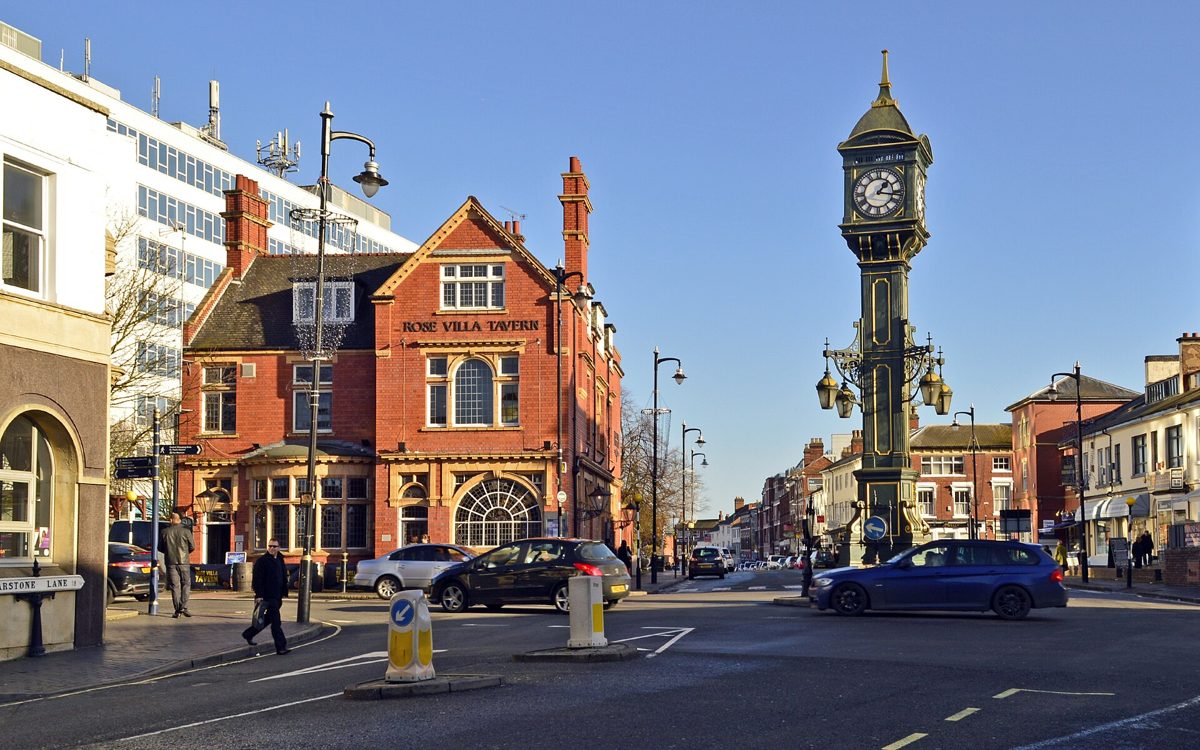
The Jewellery Quarter is a Birmingham district where jewellery manufacture, metalworking, pen making, coffin furniture and burial grounds shaped the city. This guide covers six surviving sites and their trade history, with practical viewing notes and no invented claims.
The Jewellery Quarter - trade history
The Quarter grew from small workshops rather than one grand factory. Goldsmiths, silversmiths, toolmakers, stampers, engravers and enamellers worked in close proximity, often in courtyard workshops behind street frontages. Jewellery was only one part of the local economy. The same skills and machinery supported pen nibs, coffin fittings, badges, medals and small metal goods. Trades relied on hand tools, presses, fly presses, stamps and polishing. Many firms were family businesses, and work was divided between specialists who made components and firms that assembled finished goods. The district's importance lies in this concentration of craft knowledge, not only in jewellery itself.
Matthew Boulton's eighteenth-century Soho Manufactory, though outside the Quarter proper, set a regional pattern: skilled metalworkers, division of labour and export markets. Later workshops in the Quarter inherited that culture on a smaller scale. Names such as Joseph Gillott and Josiah Mason became associated with Birmingham pen production, while firms such as Smith & Pepper and Newman Brothers show how specialised metal trades could survive into the twentieth century in compact urban premises.
Museum of the Jewellery Quarter
The museum occupies the former Smith & Pepper factory on Vyse Street. Smith & Pepper was a jewellery manufacturing firm, and the site preserves workshops, benches, tools and stock rather than a recreated display. What survives includes workbenches, hand tools, presses, dies and unfinished jewellery, giving a direct view of how small-batch manufacture was organised. Look at the layout of benches, the proximity of tasks and the tool marks on surviving objects. The value is in seeing production as a working process, not as isolated luxury objects.
The building also shows how a firm could combine making and selling. Offices, workshop floors and storage areas sit close together, which is typical of the district. When you walk through, notice how light enters the workspaces and where heavy machinery was placed. These details explain why small factories clustered in dense streets rather than spreading out.
Pen Museum
The Pen Museum records Birmingham's role in pen nib and pen manufacture, especially the mass production of steel nibs during the nineteenth and twentieth centuries. The industry depended on stamping, grinding, slitting and finishing, and it employed large numbers of workers, including women in factory and finishing roles. What survives includes presses, tools, nib samples and displays about writing equipment. Look for the stages of nib production and the variety of nib shapes, since these show how a simple object required precise tooling and quality control.
Joseph Gillott and Josiah Mason are among the names linked to this trade. Their factories turned Birmingham into a centre for writing equipment used across the world. The museum's presses and sample boards make the process visible: a strip of steel became a finished nib through repeated, exact operations. This is a good place to study how industrial craft blended hand skill with machine power.
Coffin Works
The Coffin Works, formerly Newman Brothers, was a coffin furniture factory on Fleet Street. It produced handles, ornaments, plates and fittings for coffins rather than coffins themselves. The firm's survival as a museum preserves machinery, stock, office material and workshop spaces. Look at the metal fittings, pattern books and machinery, because they show how decorative metalwork was adapted to funeral goods. The site also illustrates how a specialised trade could serve national markets from a compact urban factory.
Newman Brothers supplied fittings to coffin makers rather than selling finished coffins. That distinction matters: the firm was a component specialist, like many Quarter businesses. Pattern books and sample fittings reveal changing tastes in funeral design, from ornate Victorian styles to simpler twentieth-century forms.
St Paul's Square and St Paul's Church
St Paul's Square is the only surviving Georgian square in Birmingham, and St Paul's Church stands at its centre. The church was built in the eighteenth century and is associated with the city's early industrial and merchant community. The square's architecture and layout show the planned residential character of the area before it became dominated by workshops. Look at the church's exterior, the square's proportions and the relationship between houses and public space. It is useful to compare this planned elegance with the denser industrial streets around it.
The square once housed merchants and professionals who benefited from nearby industry. Walking its perimeter gives a sense of how Birmingham's early planners combined commerce with domestic life. The contrast with Vyse Street and Warstone Lane is instructive: order gives way to workshop density.
Chamberlain Clock
The Chamberlain Clock stands at the junction of Vyse Street and Warstone Lane. It commemorates Joseph Chamberlain, the Birmingham politician and reformer, and was erected in the early twentieth century. As a landmark, it helps orient visitors in the Quarter. Look at its position in the street pattern and its role as a meeting point. It is less a monument to craft than a marker of civic pride and local political history.
Chamberlain's career connected Birmingham manufacturing to national politics. The clock therefore belongs to the district's story even though it is not a workshop. Use it as a navigational anchor when moving between sites.
Key Hill and Warstone Lane cemeteries
Key Hill Cemetery and Warstone Lane Cemetery are historic burial grounds in the Quarter. Key Hill opened as a nonconformist cemetery, while Warstone Lane served the established church context and includes catacombs. Together they hold the graves of manufacturers, craftsmen, politicians and ordinary residents. What survives includes monuments, tombstones, catacomb structures and landscape features. Look at monument styles, family names connected to local trades and the contrast between grand memorials and simpler graves. These cemeteries are essential for understanding the people behind the workshops.
Many family names on the stones match firms and trades mentioned elsewhere in the district. Reading them turns abstract economic history into personal biography. The catacombs at Warstone Lane are a distinctive feature worth seeking out.
Practical viewing checklist
Start at the Chamberlain Clock to orient yourself before walking to other sites. Visit the Museum of the Jewellery Quarter early, since workshop tours are timed. Allow time for the Pen Museum's hands-on displays and sample collections. Book ahead for the Coffin Works, as guided access is common. Walk St Paul's Square before or after the denser industrial streets for contrast. End at Key Hill and Warstone Lane cemeteries to connect names with trades.
Frequently asked questions
What is the Jewellery Quarter best known for?
It is best known for concentrated jewellery and small metal manufacture, including related trades such as pen nibs and coffin furniture.
Why are the cemeteries included in a guide to the Quarter?
They contain the graves of the manufacturers, workers and families who built the district, so they add human context to the workshop history.
What should a visitor look for across the sites?
Look for tools, machinery, workshop layouts, street landmarks and burial monuments, because these material traces explain how the trades actually worked.
This is an independent member's guide compiled by Birmingham Society. We are not affiliated with the venues and institutions mentioned; opening arrangements and programmes change - always confirm details on the official websites before making plans.
← Back to Events