Tolkien's Birmingham - the places behind the books
A mill, a bog and two towers: the corner of the city where Tolkien spent his childhood.
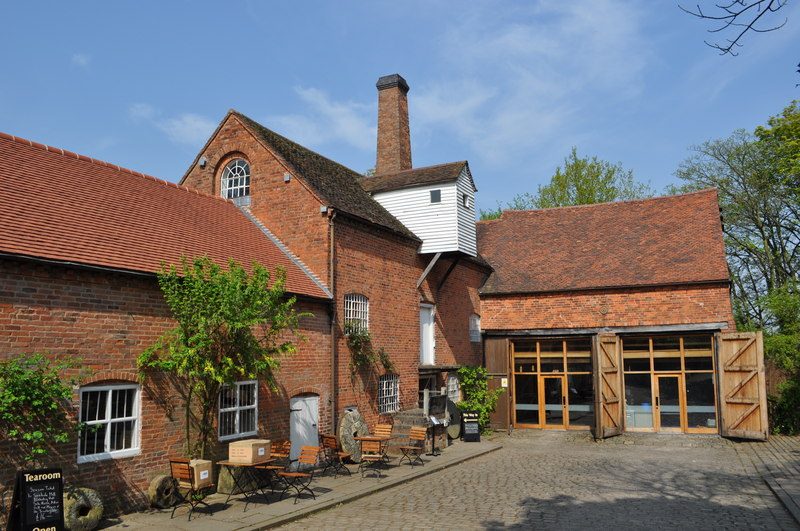
Tolkien spent part of his childhood in and around Birmingham, and several local places are now widely associated with his imagination. This guide covers only six well-documented sites: Sarehole Mill, Moseley Bog, the Shire Country Park, Perrott's Folly, the Edgbaston Waterworks tower, and the Birmingham Oratory.
Sarehole Mill
Sarehole Mill is a historic watermill in the Sarehole area, close to where Tolkien lived as a young child. The mill and its setting are among the most frequently cited local features in discussions of his early landscape. Tolkien later recalled the Sarehole countryside with affection, and readers have long connected that remembered rural edge of Birmingham with the Shire's sense of a settled, small-scale world. The mill itself is a real building with a documented local history, not a reconstruction created for literary tourism.
Moseley Bog
Moseley Bog lies near Sarehole Mill and is part of the same green corridor. It is a wetland and woodland site that has been associated with the darker, older corners of Tolkien's imagined landscapes. The association is interpretive rather than documentary: Tolkien did not leave a detailed map of childhood walks, but the bog's atmosphere and location make it a natural part of any serious local Tolkien itinerary. Treat it as a place of memory and ecology, not as a confirmed model for one specific scene.
The Shire Country Park
The Shire Country Park is a linear park and nature corridor that includes Sarehole Mill and Moseley Bog along the River Cole. Its name reflects the area's Tolkien associations rather than a single documented statement by Tolkien. Walking it gives a sense of how rural fragments survive inside a modern city. It is useful for understanding the geography of Tolkien's early years, especially the movement between built streets and open ground.
Perrott's Folly
Perrott's Folly is a tall eighteenth-century tower in Edgbaston. Together with the nearby Edgbaston Waterworks tower, it forms one of Birmingham's most famous paired landmarks in Tolkien discussion. The two towers are widely associated with the title and imagery of The Two Towers, but the link should be described as a strong local tradition rather than a settled fact. Tolkien's own remarks do not provide one simple origin story for every image in the book.
The Edgbaston Waterworks Tower
The Edgbaston Waterworks tower is the second of the two Edgbaston towers often discussed in relation to Tolkien. It is a functional industrial structure, not a decorative monument, and that contrast matters. Its height and visibility made it a striking feature of the skyline near Tolkien's later childhood home. Readers may see a resemblance to Orthanc or Minas Morgul, but resemblance is not proof of direct inspiration.
The Birmingham Oratory
The Birmingham Oratory is central to the religious and family context of Tolkien's upbringing. Tolkien's mother, Mabel, brought her sons into contact with the Oratory, and Father Francis Xavier Morgan later became their guardian. The Oratory therefore belongs in any account of Tolkien's Birmingham years, not because it supplied a fantasy image, but because it shaped the intellectual and spiritual environment around him. Its importance is biographical and formative.
How to read these associations
A useful local approach separates three things: documented biography, such as residence, family, and guardianship documented topography, such as the location of a mill, bog, or tower later association, such as a place becoming linked with a novel decades afterward
This distinction keeps the guide honest. Sarehole Mill and Moseley Bog are real childhood landscapes. Perrott's Folly and the Waterworks tower are real Edgbaston landmarks. The Birmingham Oratory is a real religious community with a documented role in Tolkien's family life. Their literary meanings are layered on top of those facts.
Frequently asked questions
Which Birmingham place is most closely tied to Tolkien's childhood?
Sarehole Mill and the surrounding Sarehole area are the most commonly cited childhood landscape, because Tolkien lived nearby as a young child and later remembered that rural edge of Birmingham. Moseley Bog, close to the mill, is usually discussed alongside it.
Did Perrott's Folly and the Edgbaston Waterworks tower directly inspire The Two Towers?
They are widely associated with the idea of paired towers, and the association is longstanding in local Tolkien discussion. It should be treated as an association and tradition, not as a single documented source that Tolkien confirmed in one clear statement.
Why include the Birmingham Oratory in a literary places guide?
The Oratory matters because it was part of Tolkien's family and religious life, especially through his mother's connection and Father Francis Xavier Morgan's later guardianship. It helps explain the environment in which Tolkien grew up, even though it is not usually treated as a direct model for a fictional location.
This is an independent member's guide compiled by Birmingham Society. We are not affiliated with the venues and institutions mentioned; opening arrangements and programmes change - always confirm details on the official websites before making plans.
← Back to Events